


EZRA WUBE
by Bitu Cassundé
From his earliest steps in Addis Ababa, Ethiopia, where he was born in 1980, Ezra Wube was impelled to forge a creative lexicon deeply imbued with the sign of displacement. The body in transit, the varied landscapes and the invented territories reshape alternative experiences of place, activating layers of memory through which to examine the present, between the colonial violence of the past and a future taking shape as chaotic, polluted, and destructive through irresponsible human action, with its impacts and transformations.
Based in New York, the visual artist has internalized the metropolitan environment as a terrain of continual uncanniness in the face of a culture of artificiality and the unruly malleability of time and place. From this age-old friction emerges an expanded praxis that spans drawing, collage, painting, performance, video, and animation. In his work, handcrafted processes and audiovisual narratives give substance to a poetic project deeply committed to reinscribing memory in diasporic contexts.
Wube’s method draws on the digital shortcut to foreground the traces of manual labor and the physical time of making. Each frame of the animation is built up pictorially, in layers of paint that constantly overlap and transform on the same medium. The technique of frame-by-frame painting mirrors the urgency of displacement and the fragility of the diasporic ecosystems that mark his entire trajectory, revealing the inseparability of his creative process from his political and environmental awareness.
The depth of his visual research is grounded in his education, with an undergraduate degree from the Massachusetts College of Art and a master’s degree from Hunter College. Within these institutional settings, Wube found the tools to articulate his ancestral heritage and the urgency of the contemporary in a systematic fashion. The artist sees creation as a space for circulation and collective sharing, which led him to found the Addis Video Art Festival in his home city in 2015 and organize it ever since, shaping a vigorous international platform for video art.
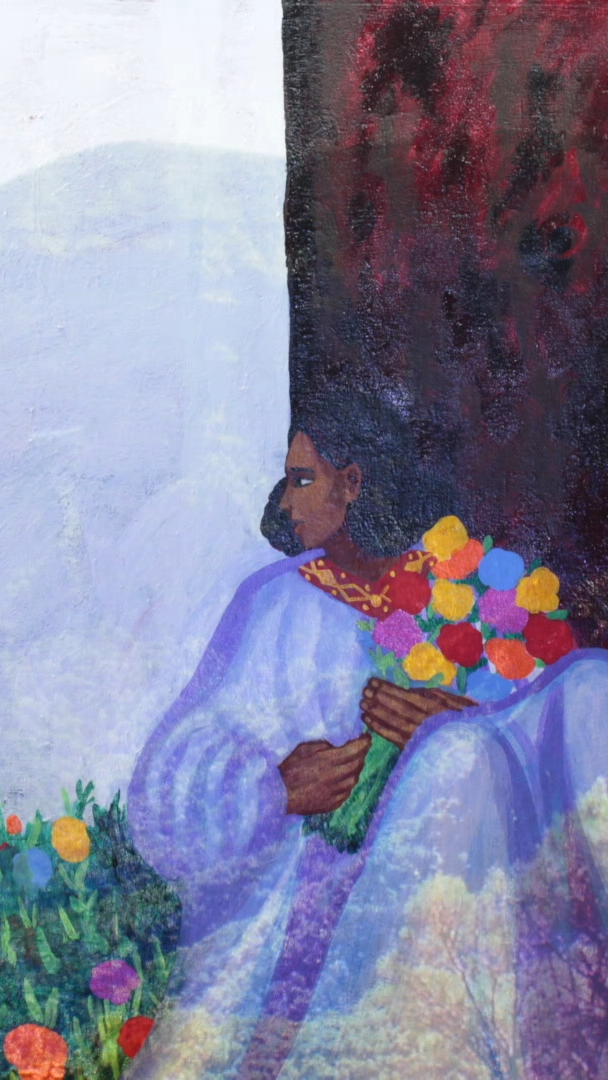
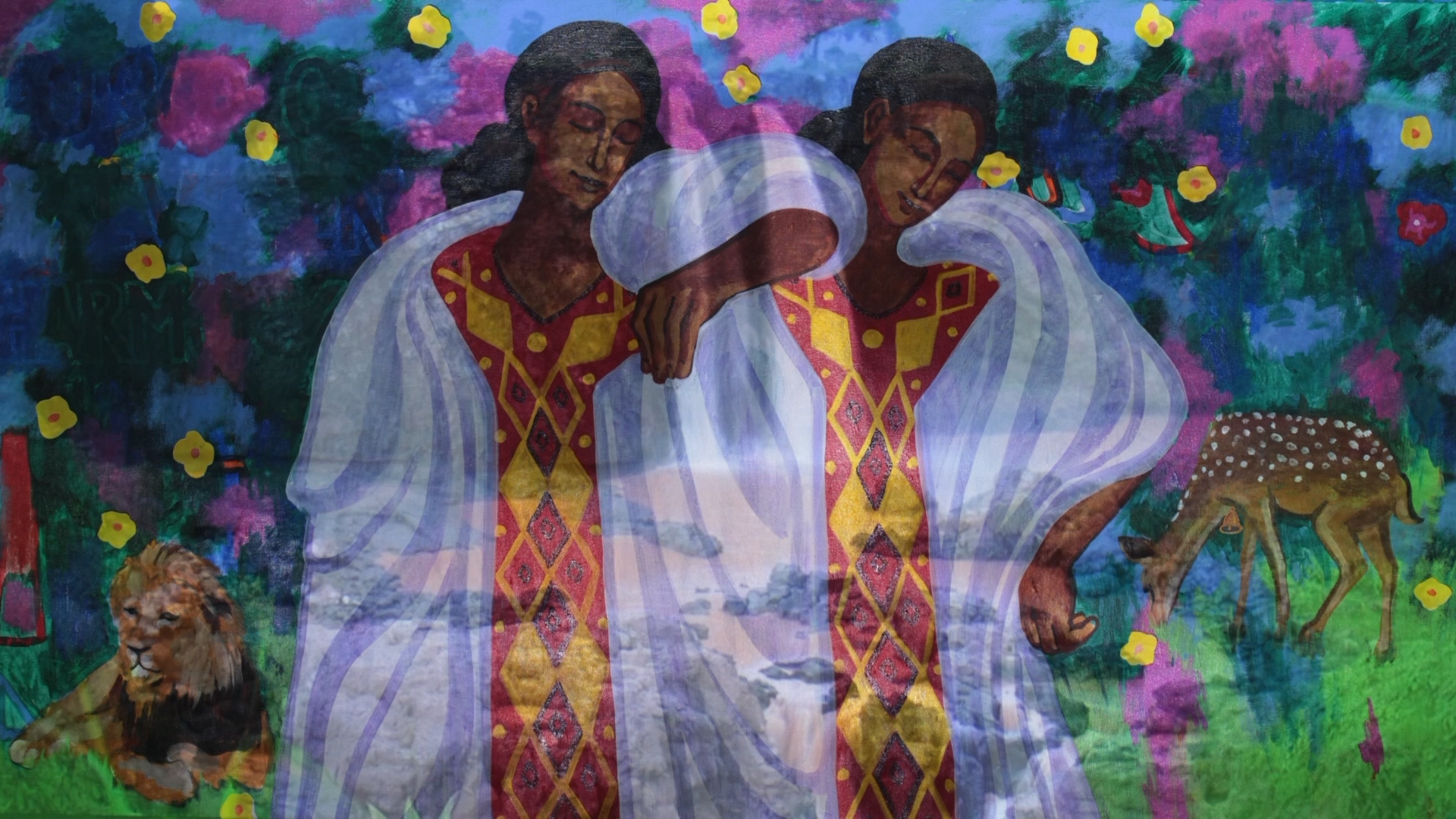
It is, however, in the animation Hidirtina (2018) that the interweaving of myth, African descent and urban life reaches one of its most powerful syntheses. The stop-motion video, just over nine minutes long, projects the symbolic spatialities of Ethiopian and Eritrean popular culture onto the arid silhouette of New York’s skyscrapers. Drawing on oral accounts from an immigrant woman in the New York community, the work recovers a legend of the Habesha people. The plot follows the hunter Yohanes who, deaf to the warnings of the immortal forest sisters, kills a sacred deer and brings a terrible punishment upon himself. Temporarily saved by the love of one of the sisters and the magic of an amulet from a protective tree, the hunter seals his tragic fate when he loses the talisman in the waters of a river and is mercilessly destroyed and devoured by vultures.
By animating this metamorphic existential narrative, Wube brings migration flows into proximity with the metropolitan landscape within a framework in which tradition is understood not as a static relic, but as a force for survival. The film reveals how legends change and camouflage themselves in the liminal conditions of a new culture, yet continue to provide the backbone of a non-negotiable world view.
The relevance of this imaginative ecosystem has secured Ezra Wube’s poetic body of work a sustained presence on the global contemporary art circuit, including the Dakar Biennial (2014 and 2024) and the Lyon Biennial (2015). The porosity of his work also finds resonance in notable solo exhibitions at the Museum of the Moving Image (2014 and 2017) and the Chrysler Museum of Art (2018), as well as his participation in the 21st Sesc_Videobrasil Contemporary Art Biennial (2019), among others.
More recently, the political and existential urgency of his trajectory has been recognised through the Michael Richards Visual Arts Award (2022) and the commissioning of PROJECT ECOPOLIS for the High Line Network (2024), as well as his participation in the group exhibition The Myth of Normal at the MassArt Art Museum (2023–24). Far from yielding to the structural erasure imposed by sterile landscapes, Wube transforms the moving image into a crossroads of temporalities, demonstrating that myth still breathes, lurking and resisting in the interstices.
___________________________________________________________________________________________
Bitu Cassundé is a curator, researcher and educator. Heritage and Memory Manager at Centro Cultural do Cariri (Crato, CE), Cassundé holds a PhD in Arts from the Federal University of Pará and a master’s degree in Arts from the Federal University of Minas Gerais. Throughout his career, he has held important positions at cultural institutions, serving as curator of Museu de Arte Contemporânea do Ceará (2013–2020), coordinator of the Visual Arts Laboratory at Porto Iracema das Artes (2013–2018) and director of Museu Murillo La Greca (2009–2011). He has been part of the curatorial teams for projects such as À Nordeste at Sesc 24 de Maio (2019), Itaú Cultural’s Rumos Visual Arts Programme (São Paulo, 2008–2010) and the 19th Videobrasil Festival (2015), and has curated exhibitions at venues including Centro Cultural do Cariri, Fundação Iberê Camargo, MAC Ceará, Museu Vale and Paço das Artes, among others. In 2025, he opened Luiz Braga – arquipélago imaginário at Instituto Moreira Salles (2026 ABCA Award in the Exhibition Curatorship category) and at Paço Imperial. He is currently researching the connections forged through movement between Brazil’s North and Northeast regions, with an emphasis on economic cycles, migration flows and the connections between life, desire and art. His research also addresses questions of subjectivity, confession, intimacy and biography.
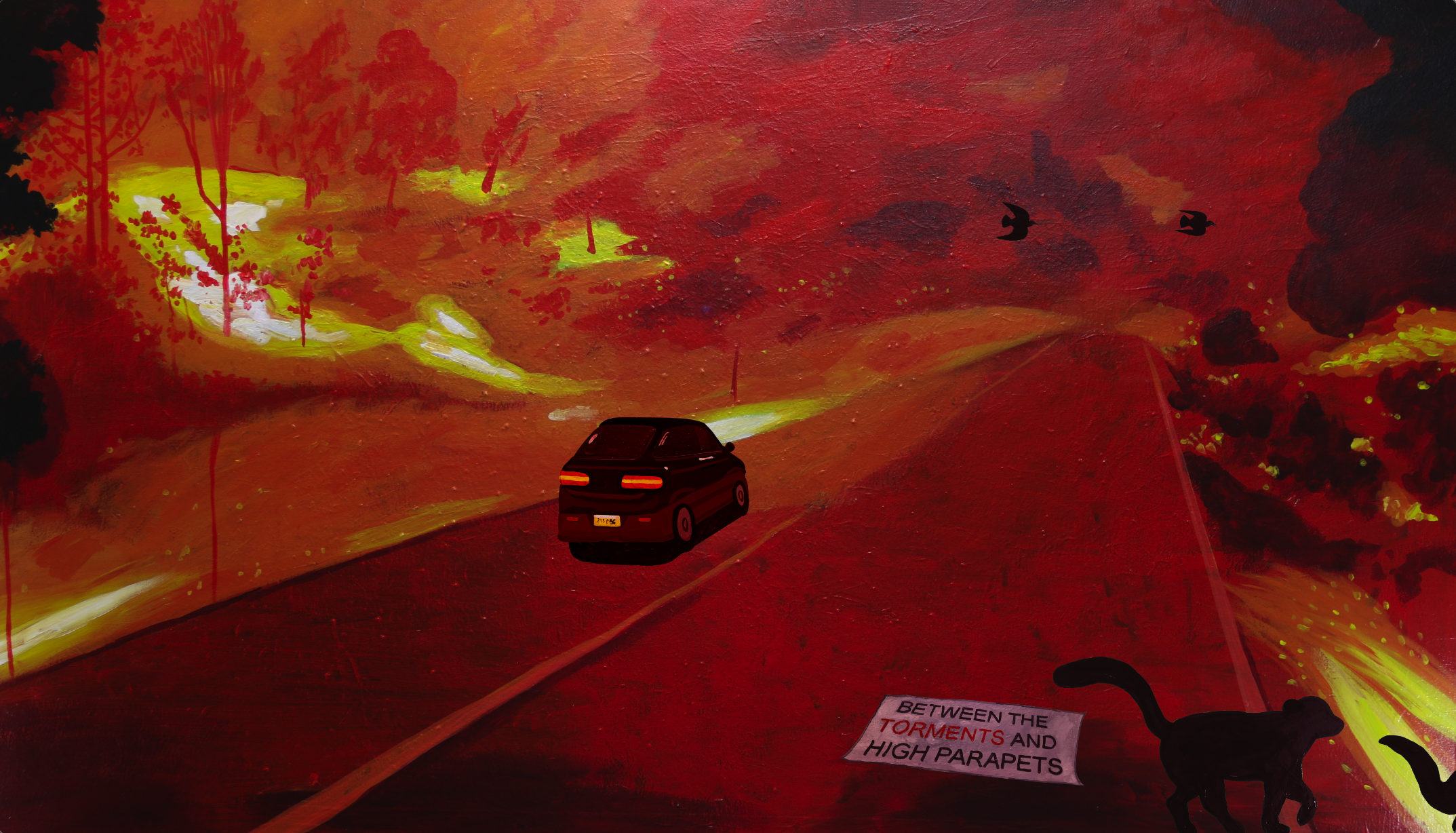
The Anthropocene Comedy
Ezra Wube, 2022
Video, 29’40”
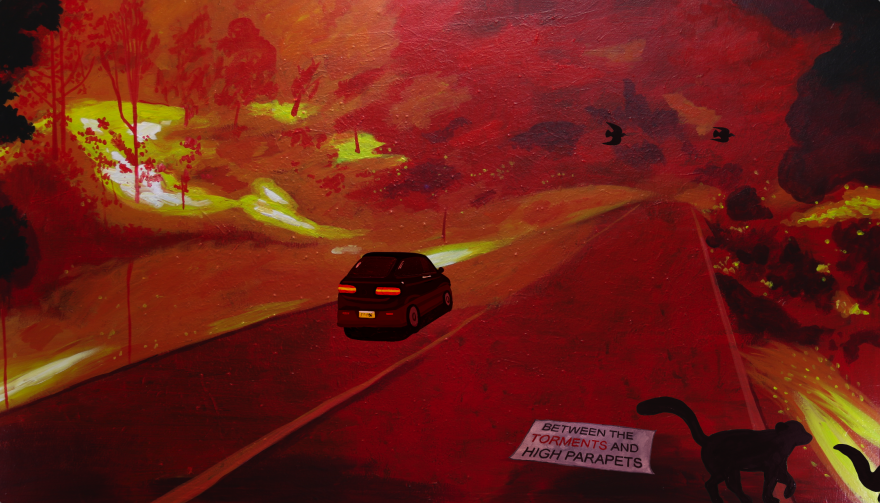
Inspired by Dante Alighieri’s The Divine Comedy, the short film reinterprets the journey through hell to construct a critical narrative about the contemporary environmental catastrophe. Ezra Wube develops the work through stop-motion animation of paintings on canvas and cardboard.
Hidirtina
Ezra Wube, 2018
Video, 09’13’’
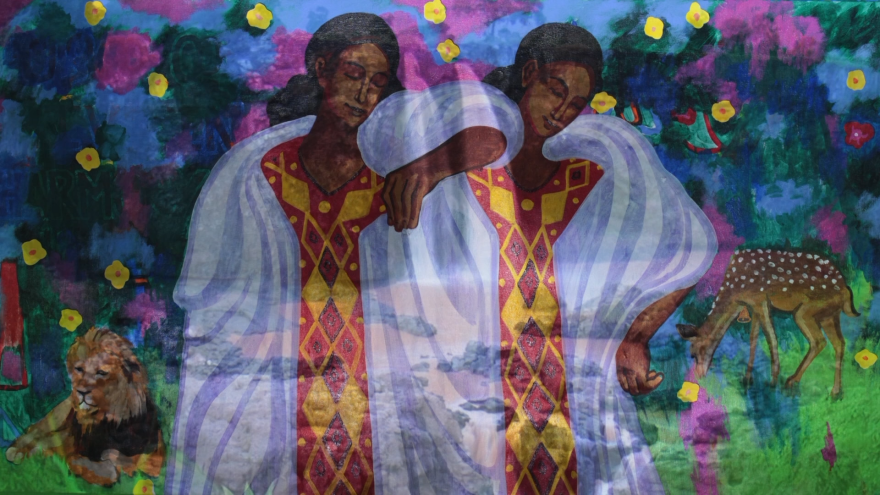
Hidirtina (Sisters) recounts a traditional legend from Ethiopia and Eritrea, told to Ezra Wube by an immigrant woman in the United States. In the story, the hunter Yohanes defies a prohibition against killing a sacred animal, an act punishable by severe penalties, but is saved by one of the immortal forest sisters. The hunter lives safely for years, protected by the amulet he has been given, until one day the object is swept away by a river and Yohanes is fatally attacked by vultures. The work tells the story through stop-motion animation of paintings that overlay elements of the forest and images of New York’s skyscrapers.
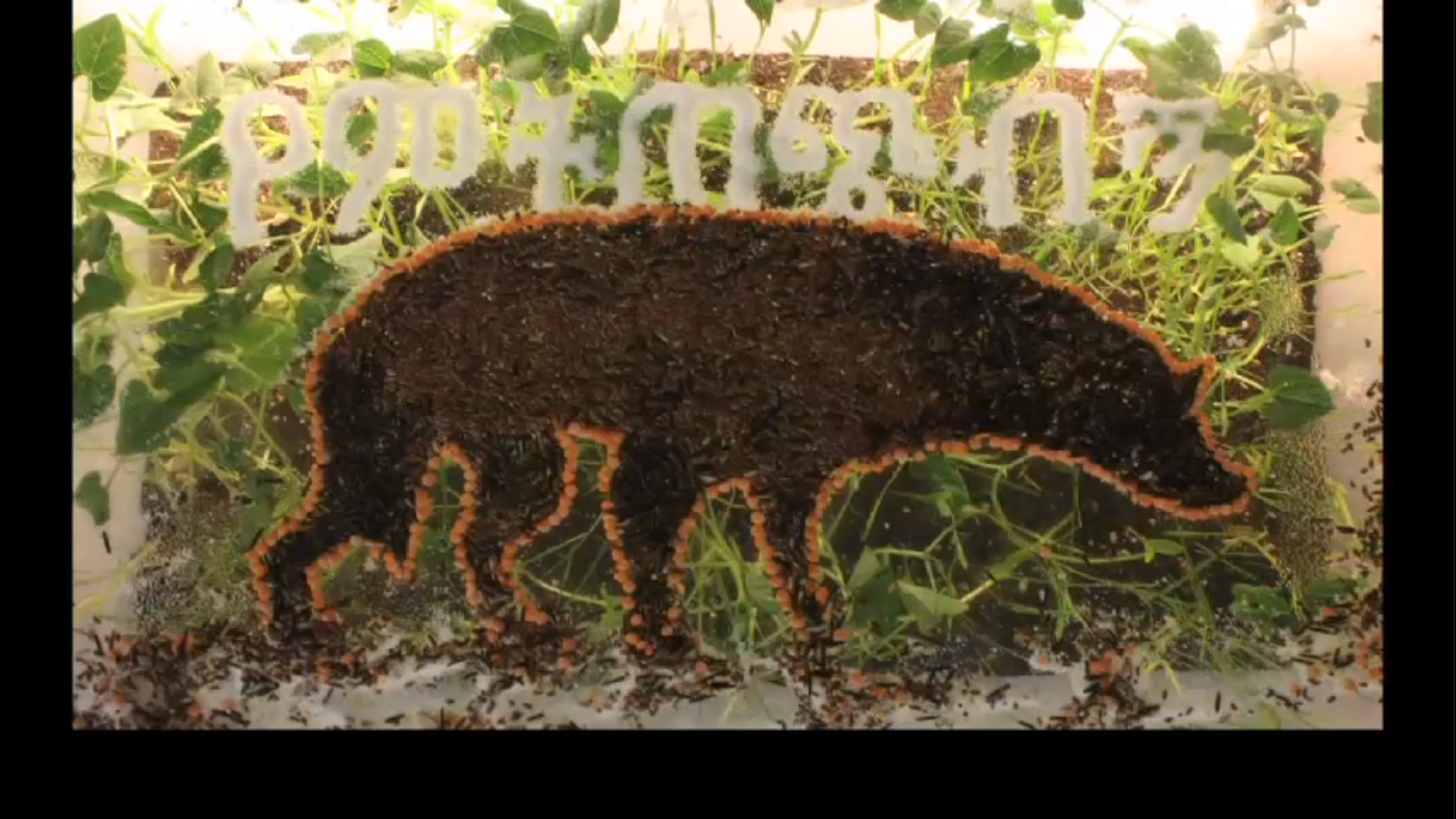
Wenzu
Ezra Wube, 2011
Video, 3’20”
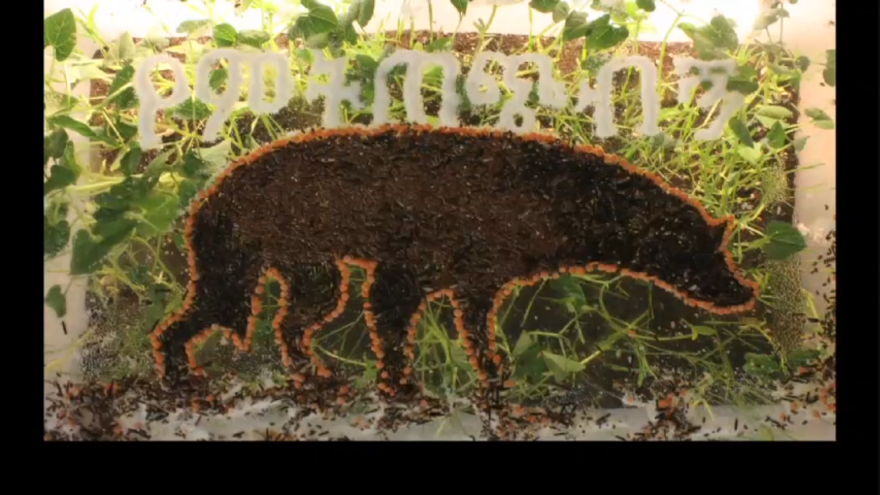
The work retells an African fable in which a hyena accuses a donkey of dirtying the river water as he drinks, even though she herself is quenching her thirst further upstream. Bringing form and content together, Ezra Wube develops the narrative through stop-motion animation made with earth, plants and everyday foods such as grains, bread and salt.